

Most of my direct managers were good to excellent. They supported both the team and me, and I made an effort to help them in return.
I’m sharing this because there’s a common belief that managers are often terrible, but this overlooks the bigger picture. We need to consider the system, the conditions they work under, and even our own roles in shaping those relationships.
Even more, we are wired to remember negative experiences more vividly than positive ones. Therefore, it’s important for us to actively counter this tendency and recognize the positives as well.
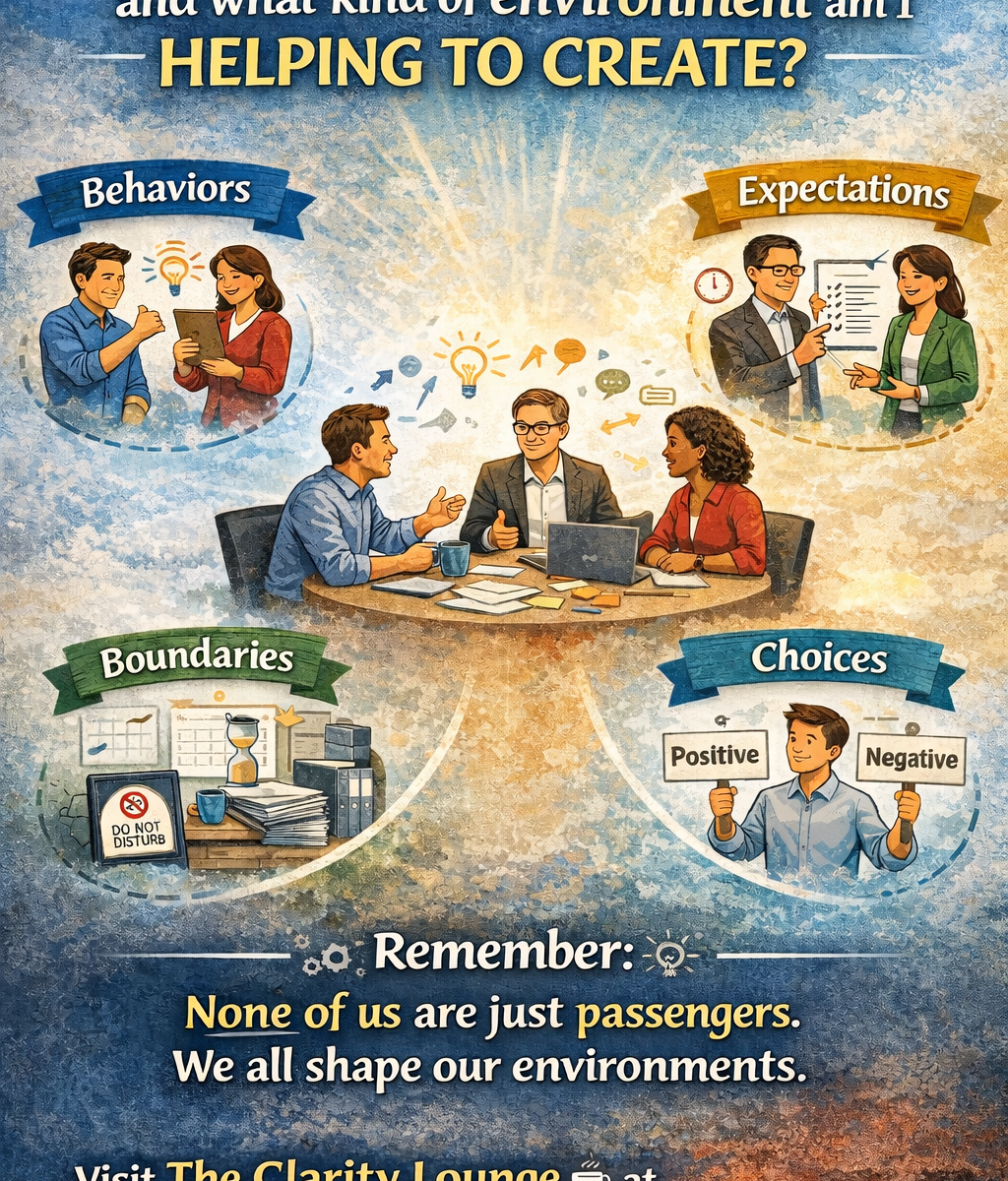
And finally, none of us are just passengers in these environments. Through our behaviors, expectations, boundaries, and choices, we are actively shaping the conditions around us, whether we acknowledge it or not.
So, as you step into this year, a useful question might be: How do I want to show up, and what kind of environment am I helping to create?
References
Baumeister, R. F., Bratslavsky, E., Finkenauer, C., & Vohs, K. D. (2001). Bad is stronger than good. Review of General Psychology, 5(4), 323–370.
https://doi.org/10.1037/1089-2680.5.4.323
→ Establishes the negativity bias, explaining why negative experiences with managers are remembered more vividly than positive ones.
Heaphy, E. D., & Dutton, J. E. (2008). Positive social interactions and the human body at work: Linking organizations and physiology. Academy of Management Review, 33(1), 137–162.
https://doi.org/10.5465/amr.2008.27749365
→ Demonstrates how supportive relationships at work, including manager–employee relationships, positively affect individuals and organizations.
Nielsen, K., & Randall, R. (2013). Opening the black box: Presenting a model for evaluating organizational-level interventions. European Journal of Work and Organizational Psychology, 22(5), 601–617.
https://doi.org/10.1080/1359432X.2012.690556
→ Shows how organizational systems and conditions shape leadership behavior and employee experiences, reinforcing that outcomes are not solely about individual managers.
Bandura, A. (2001). Social cognitive theory: An agentic perspective. Annual Review of Psychology, 52, 1–26.
https://doi.org/10.1146/annurev.psych.52.1.1
→ Supports the idea that individuals are active agents, shaping environments through their behaviors, expectations, and choices—not passive recipients of conditions.
 Dr. Treca Bourne